

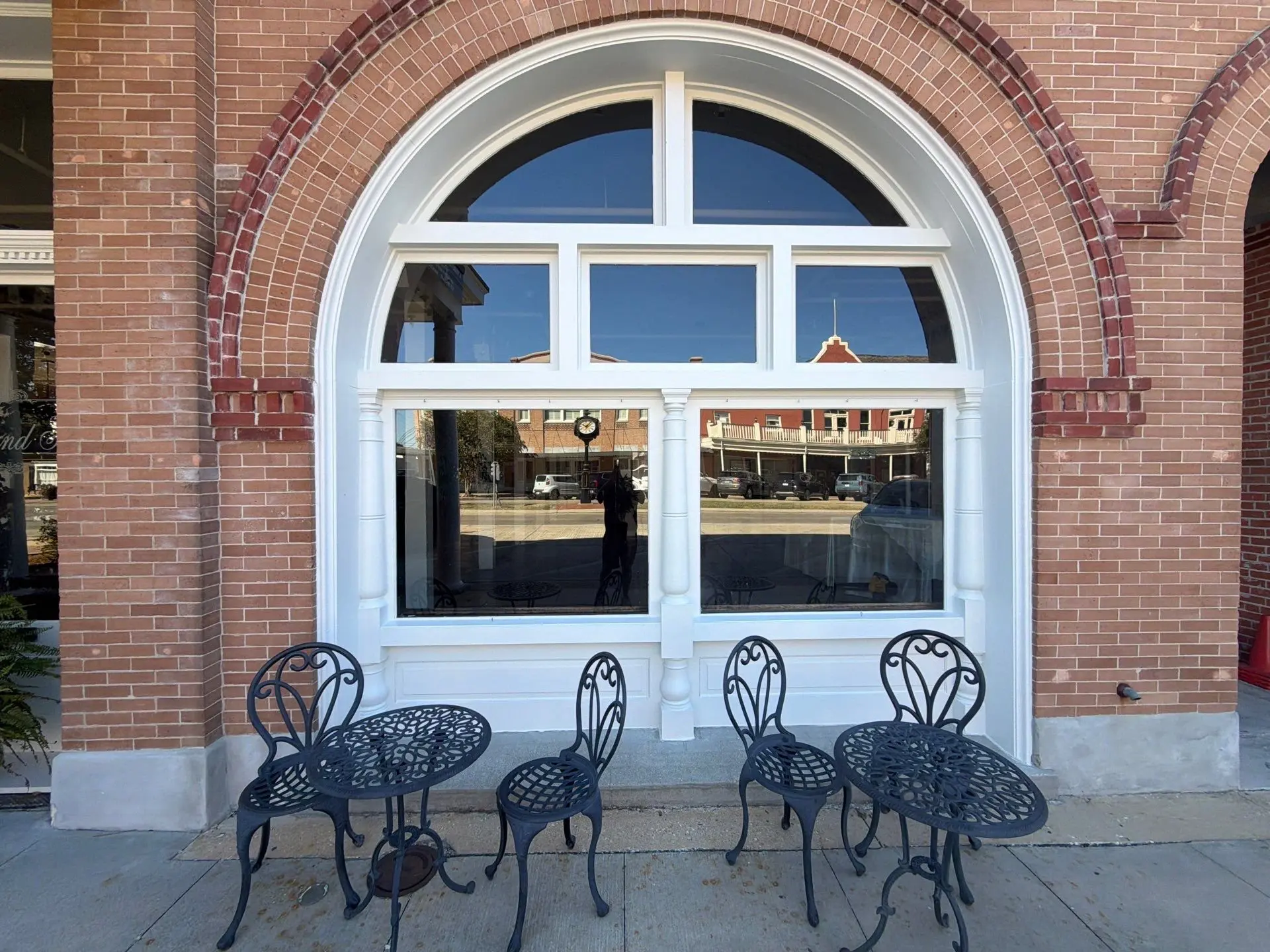
The Before
South Louisiana is hard on paint, and it's hardest on wood. Sun pulls the color out of it. Humidity works into every joint. Heavy rain finds whatever gap the last paint job left behind.
This property in Crowley had reached the point where the surfaces told the whole story. The paint had faded badly, the kind of color loss that happens so gradually nobody notices until they see an old photo. Caulk was cracked or missing in the joints. Paint was peeling in places, which is adhesion giving up rather than a cosmetic problem. And there were soft spots in the wood, meaning water had been getting in long enough to do structural damage.
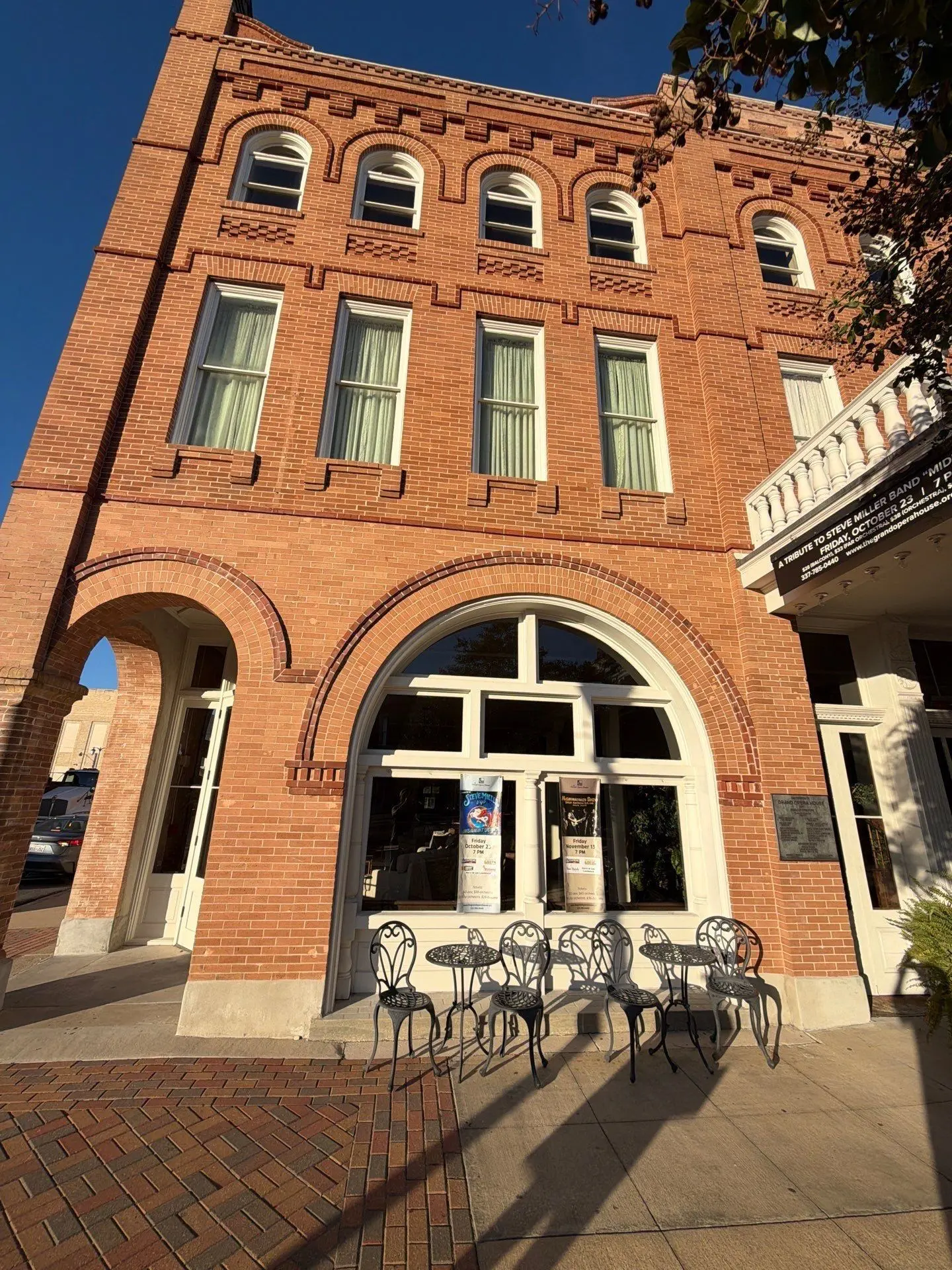
In several areas, the previous painter had missed spots entirely or left them unsanded. That usually shows up when a job gets rushed at the end, and it's a reliable sign other steps got shortened too.
Older buildings carry more of this risk than newer ones, simply because there's more wood and more detail in the way they're built. Trim profiles, casings, columns, soffits, and the joints between them add up to a lot of linear footage where two pieces meet, and every one of those seams is a place water gets in once the seal gives out. The same detail that makes a building worth preserving is the detail that makes its paint job demanding.
Cracked caulk is the costliest of those failures. Caulk keeps water out of seams that move with every temperature swing, and once it splits, the joint is open. Every rain pushes a little more moisture into a place that can't dry out. The soft wood on this property is what that looks like after a few years of it.
Timing added pressure on top of condition. The owners had their granddaughter's reception that weekend, and the property needed to look right for it. A deadline like that usually decides how a project gets run, and not always for the better.
The Problem
The scope was a full exterior repaint with real wood repair underneath it. The owners wanted the substrates sealed so the wood would be protected from the Louisiana climate instead of slowly absorbing it. That's the right instinct. Paint on a building like this isn't decoration, it's the barrier between the weather and the structure, and when the barrier has gaps, the weather wins every time.
Three things made it harder than a standard repaint.
The prep list was longer than the paint list
Cutting out failing caulk, filling, sanding, and repairing rotten wood produces nothing a guest will ever notice. Paint is the visible part, and it goes on comparatively fast. On most jobs that imbalance is manageable. Here it meant the majority of the schedule went to work that wouldn't show up in a single photograph.
A hard deadline landed in the same week
The reception wasn't movable. And a tight deadline is exactly where prep gets trimmed, because it's the only step nobody can see you skip. That's how a building ends up in the condition this one was in: the job looks fine for a season or two, then the caulk splits again, the soft wood keeps softening under a fresh coat, and the cycle repeats years earlier than it should have.
The previous paint job had left problems behind
Missed areas and unsanded surfaces meant the starting point wasn't neutral. Those spots had to be found and corrected before anything new went on, which adds time that doesn't appear anywhere in a standard scope.
Meeting all three meant the prep had to be thorough and the schedule had to be real. Not one at the expense of the other.
The Solution
The project ran prep first, paint last, and prep was the long part.
All the failing caulk was cut out, not painted over. That distinction matters more than it sounds. New caulk applied on top of cracked old caulk bonds to a failing material, so the repair fails on the same schedule the original did. Cutting it out means the new bead bonds to the wood itself. Every joint was then recaulked with Sherwin-Williams 1050QD, sealing the seams where water had been getting in.
The full prep scope:
- Cut out all cracked and missing caulk, then recaulk every joint with Sherwin-Williams 1050QD
- Fill nail holes and small imperfections with spackle and Bondo glazing
- Sand rough and flaking areas smooth
- Repair soft and rotten wood with Bondo
- Correct the areas the previous painter had missed or left unsanded
On exterior wood, a nail hole isn't cosmetic. It's an opening, and an opening holds water against end grain, which is the fastest way to start rot from the inside. Filling them closes the entry point and gives the new coating a continuous surface to sit on.
Bondo gets used here for a reason. Standard wood filler is fine for interior nail holes, but it doesn't hold up outdoors through repeated wet and dry cycles, and it tends to shrink, crack, and release from the surrounding wood. A two-part filler cures hard, bonds aggressively, sands to a clean profile, and moves with the substrate instead of pulling away from it. On exterior wood in this climate, that difference shows up within the first couple of seasons.
Repairing the rot is the step that separates this job from a cosmetic repaint. Rot doesn't stop on its own, and coating over it hides the damage while it continues underneath. Restoring sound wood gives the coating something worth sealing.
With prep complete, the building got two coats of Sherwin-Williams Duration in Satin, color Polar White.
Duration is one of Sherwin-Williams' top-tier exterior lines, and the choice tracks directly with what the owners asked for. Premium exterior coatings cost more per gallon and buy years of service life, which is the point on a property dealing with this much sun and humidity. The satin sheen does practical work too: a soft, low luster that sheds dirt and rinses clean more easily than flat, and on architectural detail it catches just enough light to define edges without going glossy.
Two coats, not one. A single coat over faded, repaired, and patched surfaces dries uneven and leaves the film too thin where protection matters most. The second coat builds the thickness that makes a finish weather-resistant instead of just new-looking.
Sequencing is what made the deadline work. Prep ran front-loaded and continuous, so the repairs, filling, and sanding were finished before any coating went on rather than being worked around mid-paint. Caulk needs time to skin before it gets covered, filler needs to cure before it gets sanded, and a coat needs to dry properly before the next one follows it. Respecting those windows is the difference between finishing early and finishing twice.
Start to finish, repairs included, the project took 3.5 days.
Before & After
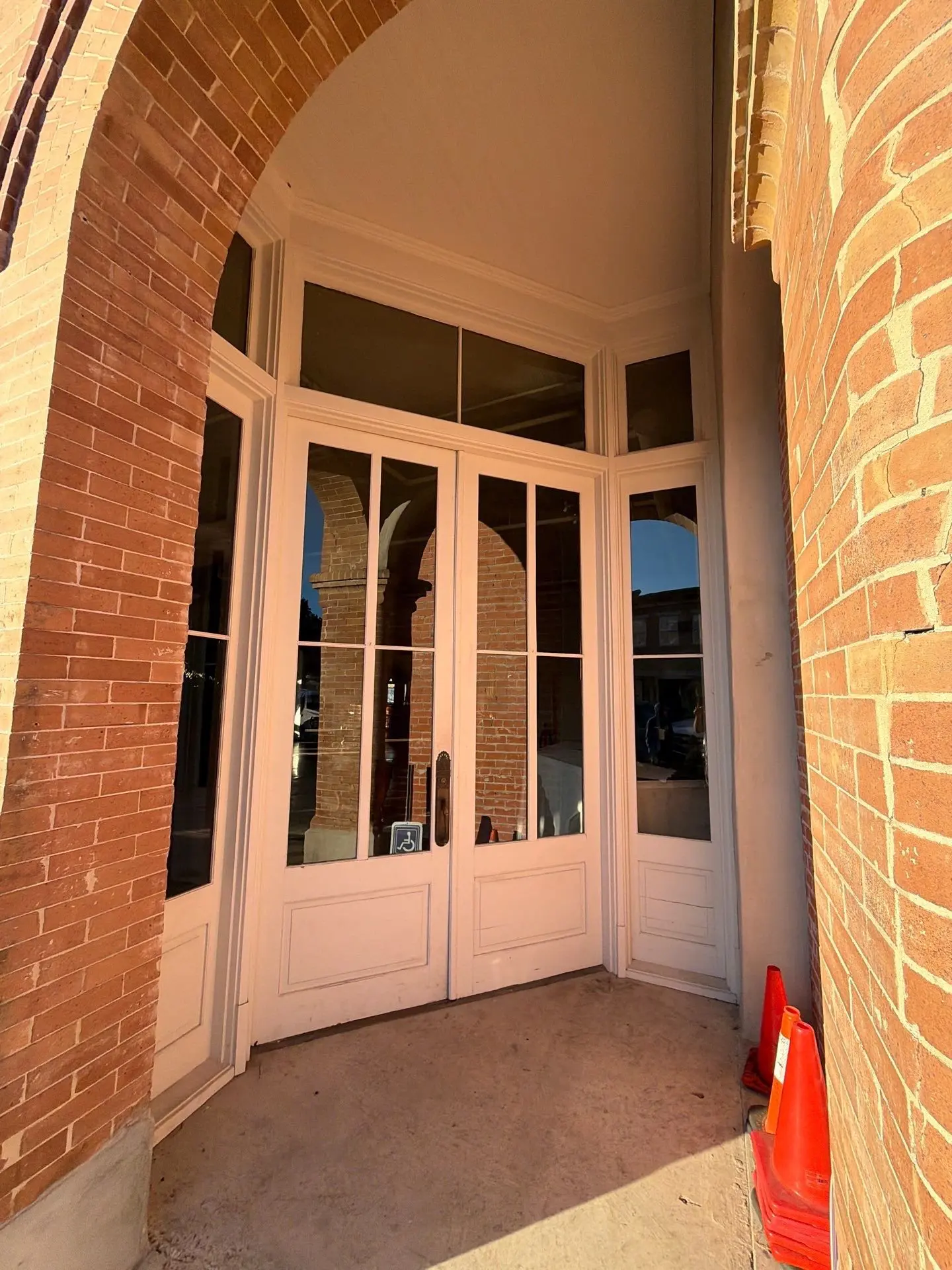
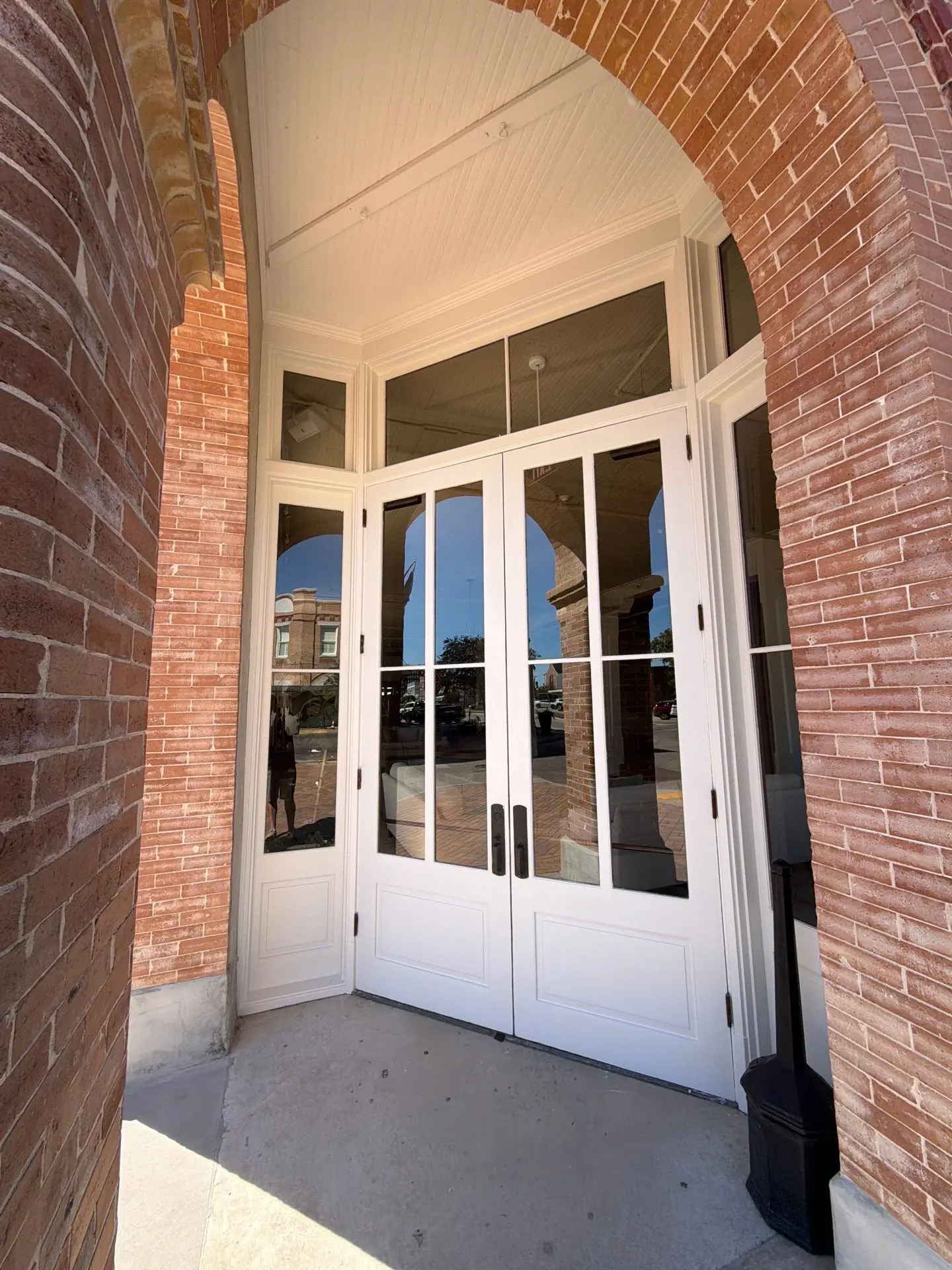
The After
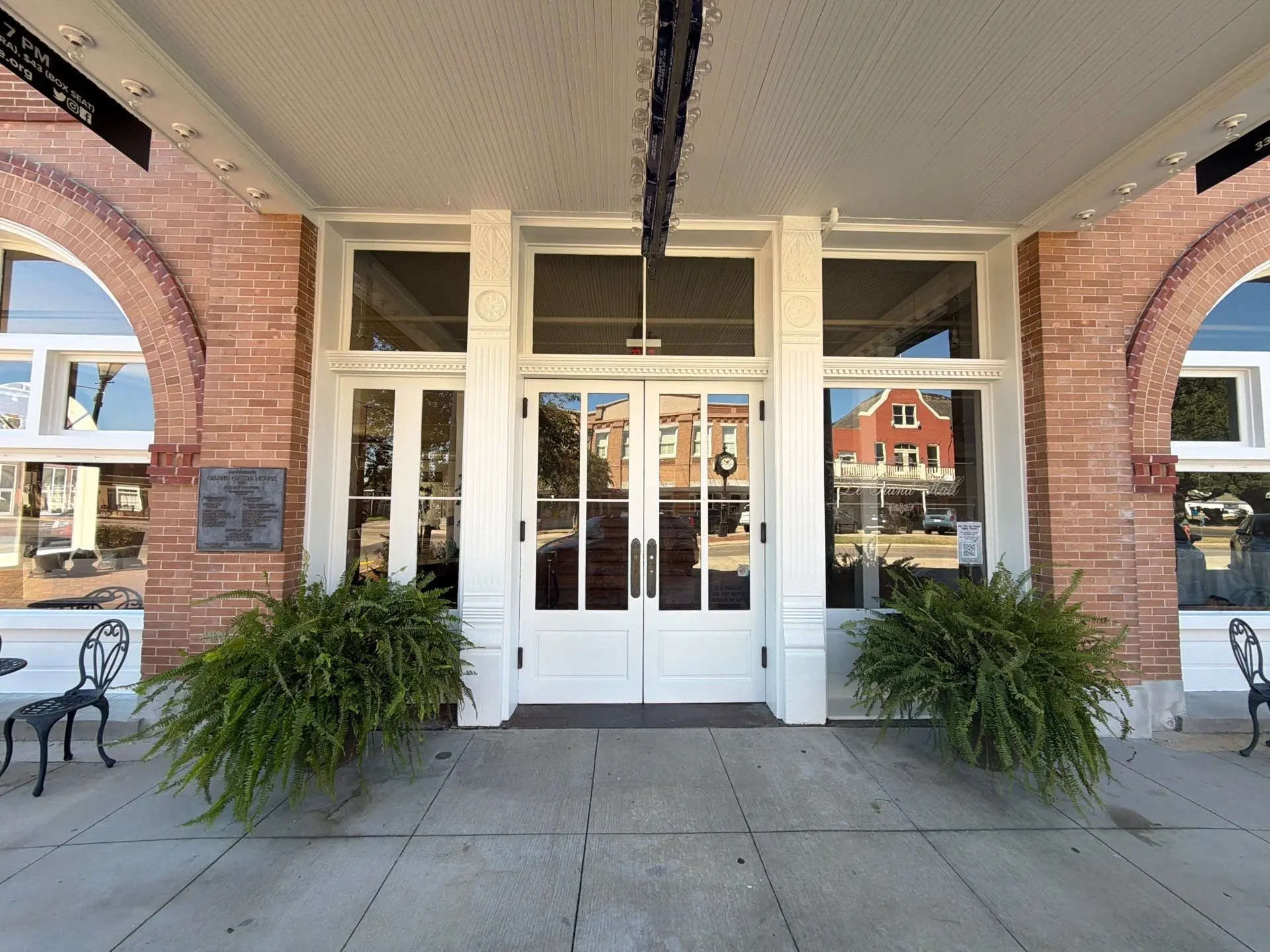
The finish looks fresh and brand new. Polar White brightens the whole facade, and the architectural detail reads clean and sharp now that the surfaces underneath it are sound.
What stayed is the character of the building. Nothing about the repair work changed its profiles or its lines, which is the goal on a property like this. The wood repairs sand flush and disappear under the coating, so what you see is the original detail with a finish that fits it.
The joints are the detail worth looking at up close. A fresh caulk line, cut in clean and painted over, reads as part of the trim instead of a repair, and that's how you can tell the seams were actually redone rather than coated over.
What won't show up in a photo is the part that matters in five years. The joints are sealed. The soft wood is repaired rather than buried. The holes are filled, the rough spots are smooth, and two full coats of a premium exterior coating stand between the wood and a climate that never really lets up.
The clients were thrilled with the result. They came outside several times during the project to sit and talk with the crew, and what they commented on most was the level of prep. That's worth noting. Most people judge a paint job by the color. Watching the caulk get cut out, the wood get repaired, and the surfaces get sanded before a single coat went on is what convinced them the finish would last.
The project wrapped on October 20, 2026, and the reception went ahead that weekend on a property that looked the way they wanted it to look.
Worth knowing if you're planning something similar: the finish lasts longer with a little attention. Walk the caulk joints once a year and look for hairline splits, especially where trim meets trim and around door and window openings. Rinse dirt and mildew off before it builds up. Deal with a chip or a soft spot while it's small, because in this climate nothing stays small for long.
If your commercial building is showing faded color, cracked caulk, peeling paint, or wood that's gone soft, you'll get an honest look at what actually needs repair and a plan built around a finish that lasts. Call (337) 279-0555 or request an estimate, and the Spell Painting team will come take a look.
